



Africa’s wildebeest migration face risk and reward during August, September and October. The iconic, perilous river crossings during these months see the survivors reach the Masai Mara. Here, they graze the fresh grass before being summoned south again when November’s short rains cause the regreening of the northern Serengeti.

During this time, Africa’s wildebeest migration reaches the northernmost point of their never-ending loop. However, it’s not just a question of putting one hoof in front of the other – there are the notoriously lethal river crossings to be made.
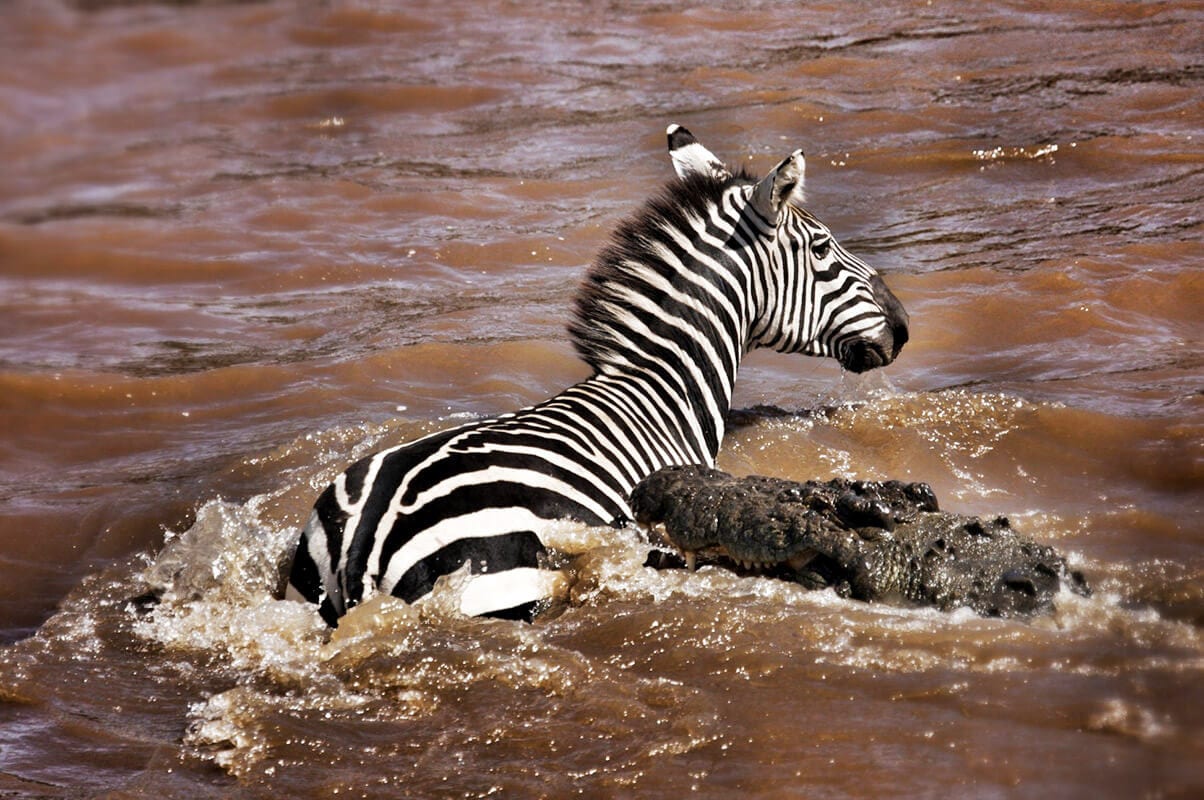
The wildebeest must run (or swim) the gauntlet of the immense and ancient Nile crocodiles that rely on this bonanza to see them through the lean months ahead.
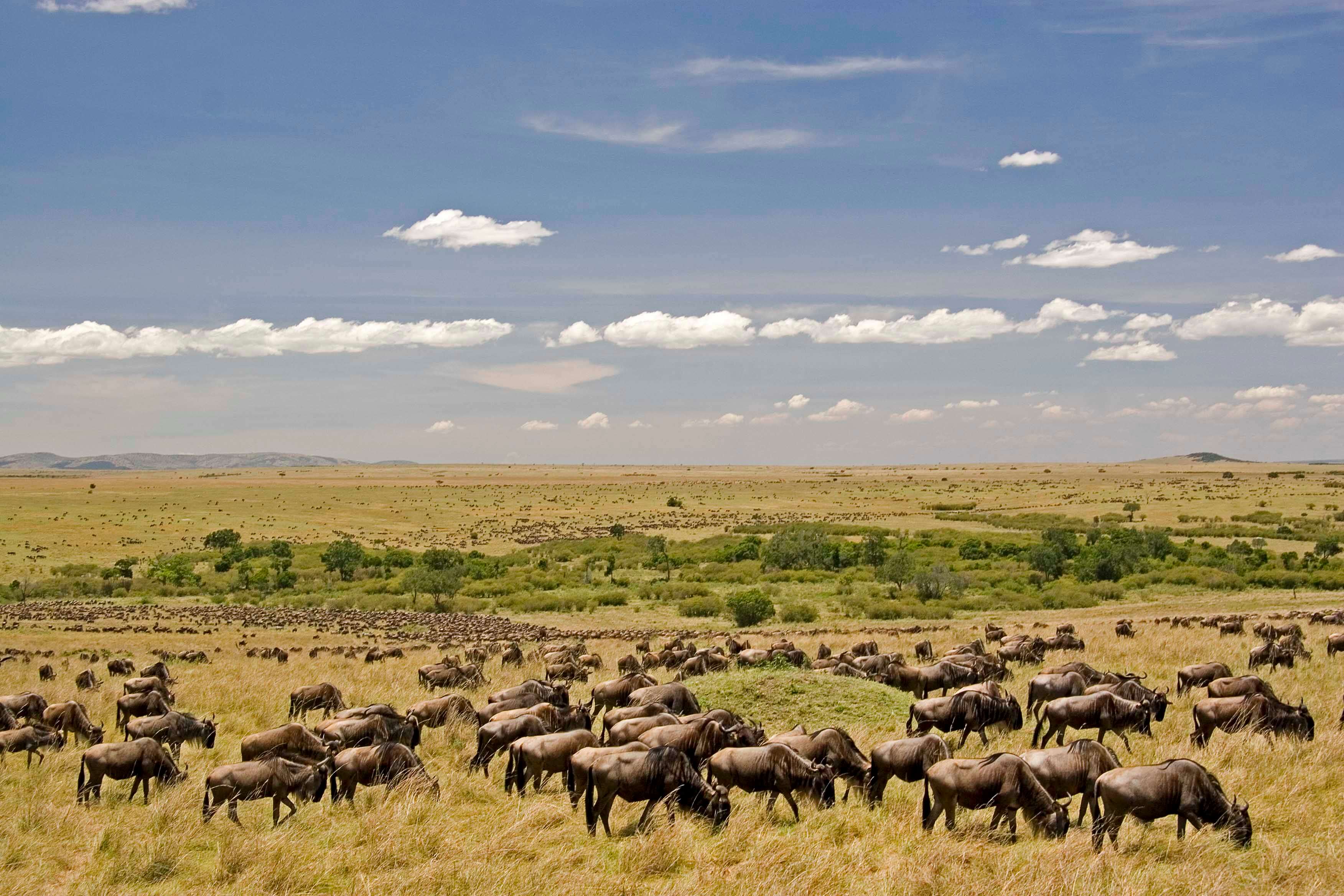
The wildebeest are drawn inexorably northwards from the calving grounds in the southern Serengeti by the allure of the next green, nutritious tuft. Kenya – like much of East Africa – experiences long rains in April and May, so the herds can cut a swathe through the new growth as they march.
The ultimate bounty awaits them in the Masai Mara, where the vanguard of Africa’s wildebeest migration begins to arrive in late July. Lying in wait is the Mara River: a combination of steep banks, treacherous narrow gullies and a watercourse still swollen from the rains.
-
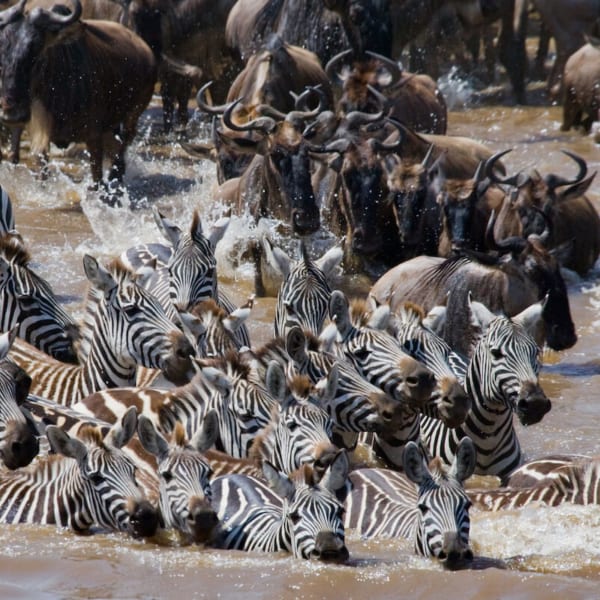 Not even the threat of ravenous reptiles can dilute the compulsion of Africa's wildebeest migration to cross rivers.
 -
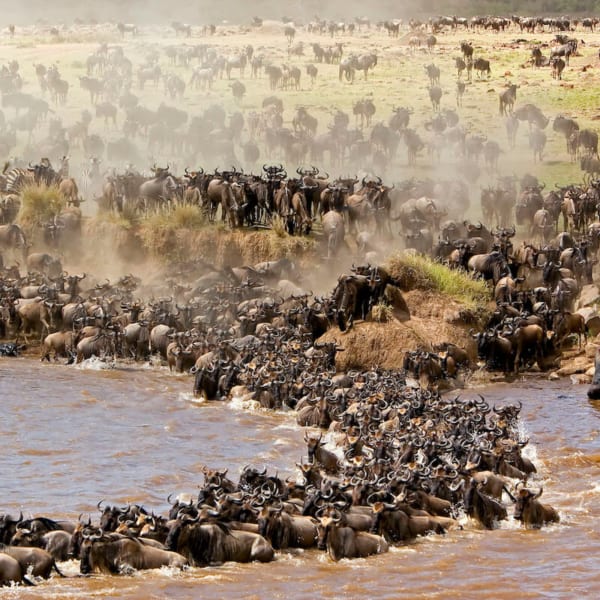 The vanguard of Africa’s wildebeest migration arrives in the Masai Mara in late July. © Mara Intrepids Tented Camp
 -
 The wildebeest that perish in the river make an important contribution to its ecosystem.
 -
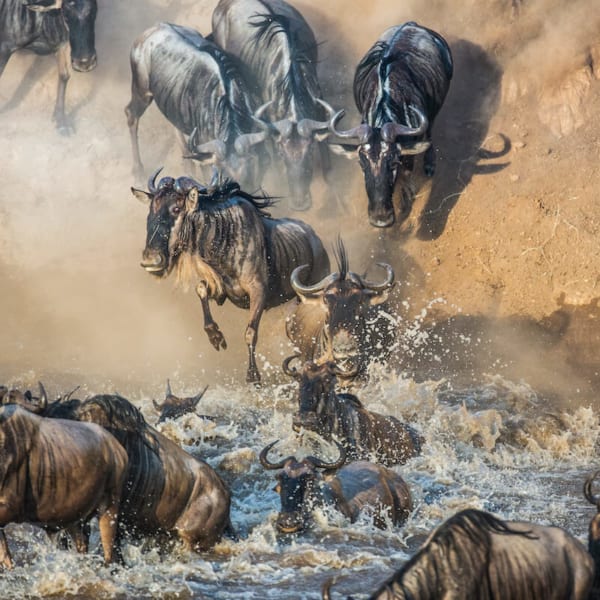 The Mara River is a combination of steep banks and treacherous narrow gullies.
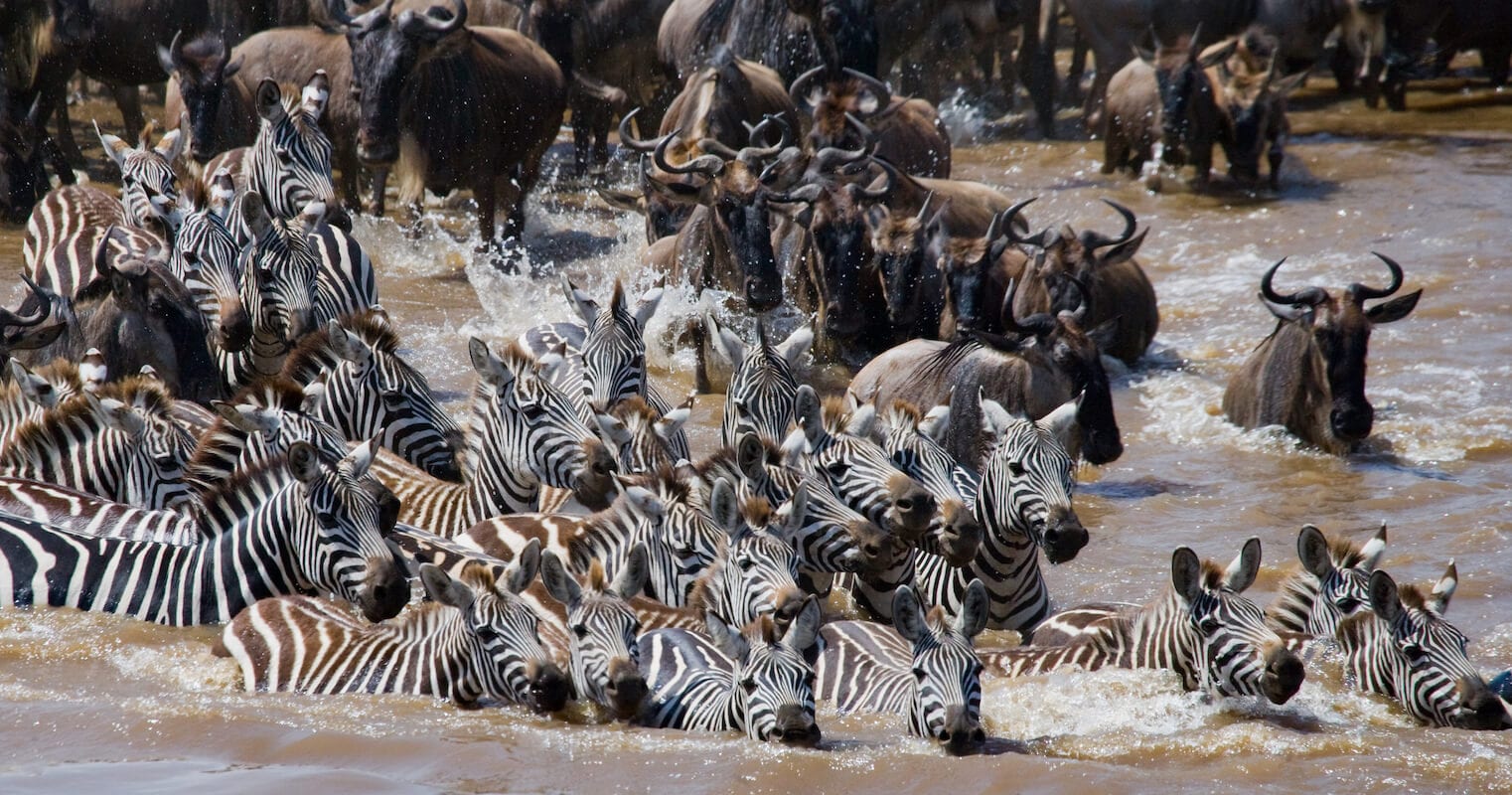

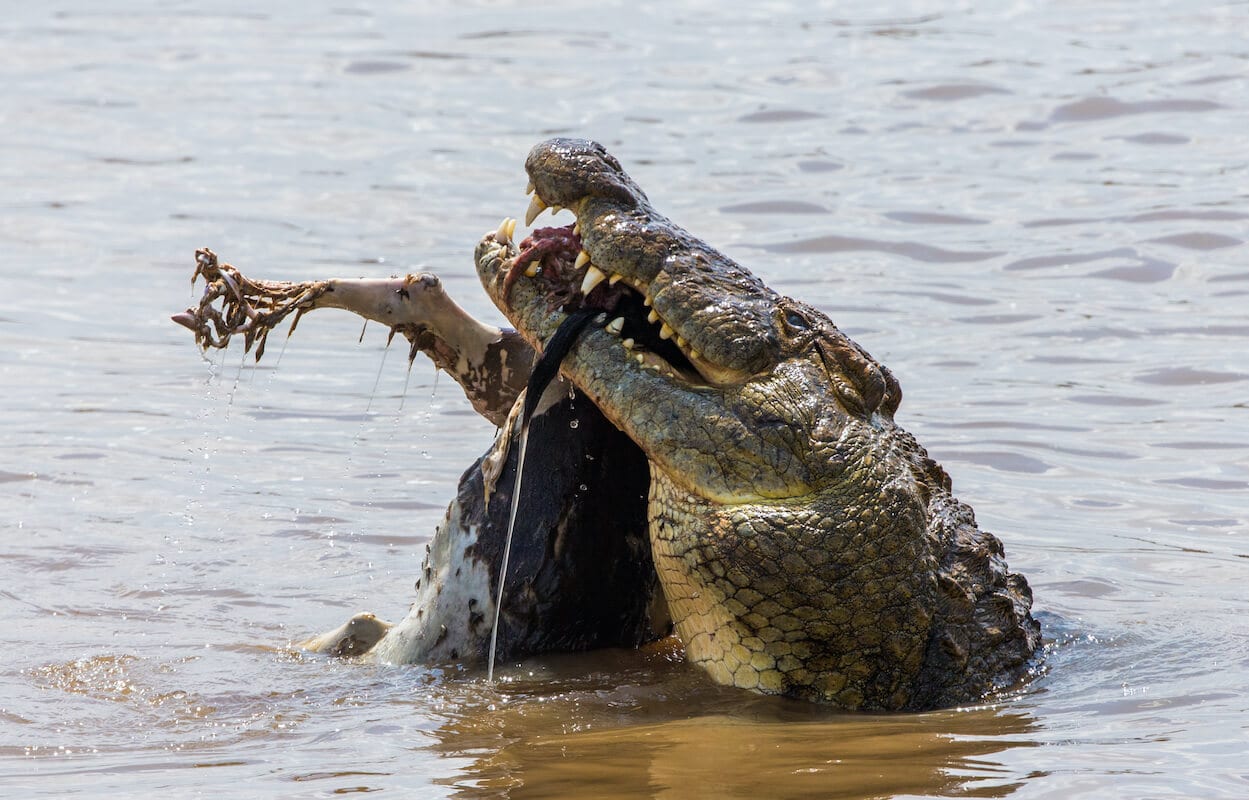
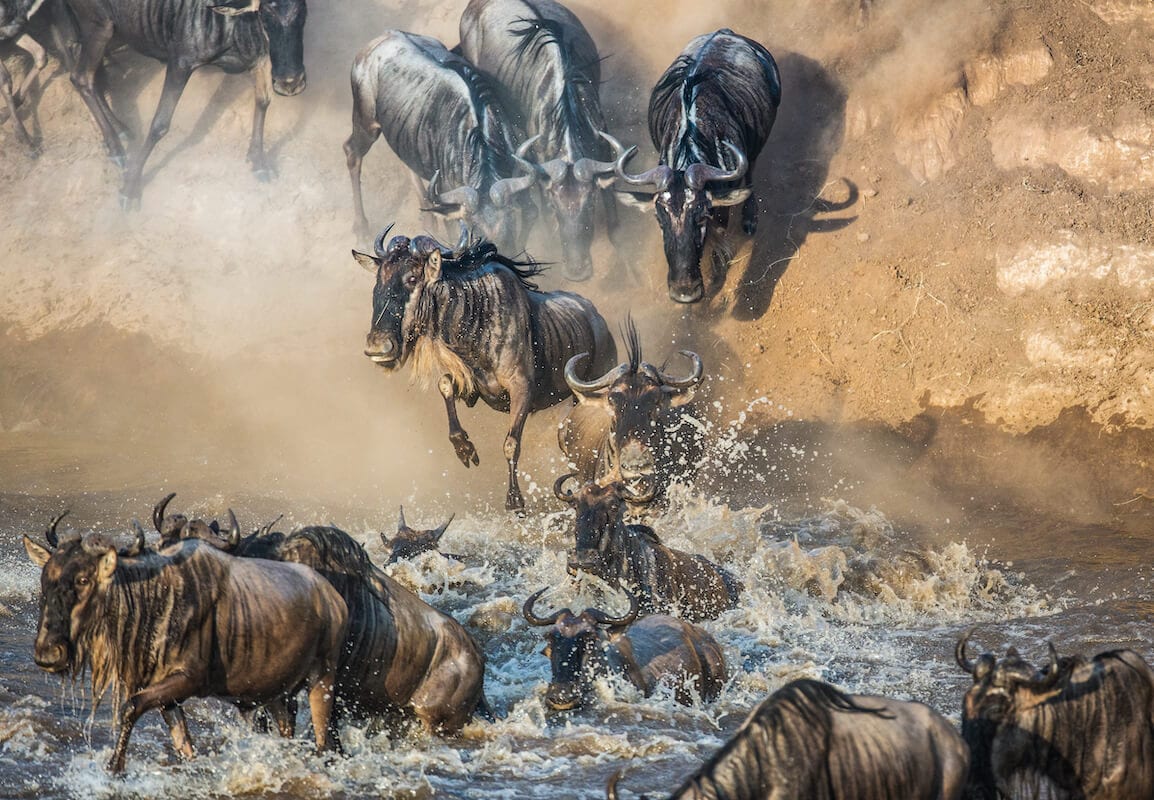
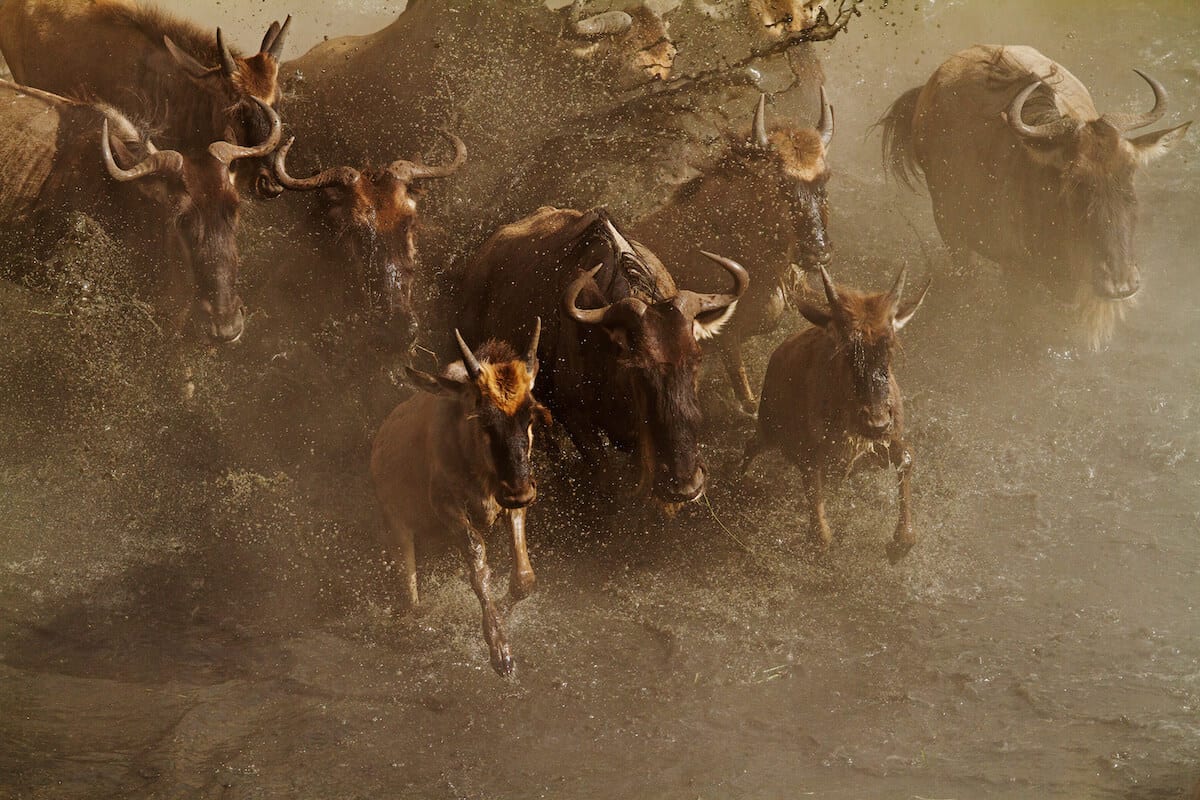
It’s literally a case of the grass being greener on the other side, and not even the ever-present threat of ravenous reptiles can dilute their compulsion to cross. There is often a pause while the antelope gather their courage, but the pressure of the serried ranks behind the leaders soon forces them to take the plunge.
As the crescendo of the migration, the Mara crossing points are on many people’s bucket lists and can become busy during these months. While the images of snapping jaws and vultures floating downstream on distended carcasses are very familiar, the actual attrition rate during the crossings has no real impact on wildebeest numbers.
Although some of the individual dramas can be heartbreaking to watch, those wildebeest that do perish in the river (more often killed during panicked stampedes than by the crocodiles) make an important contribution to the river ecosystem. It’s a perfect example of how in the savannah, death is a beginning and an end in equal parts.
-
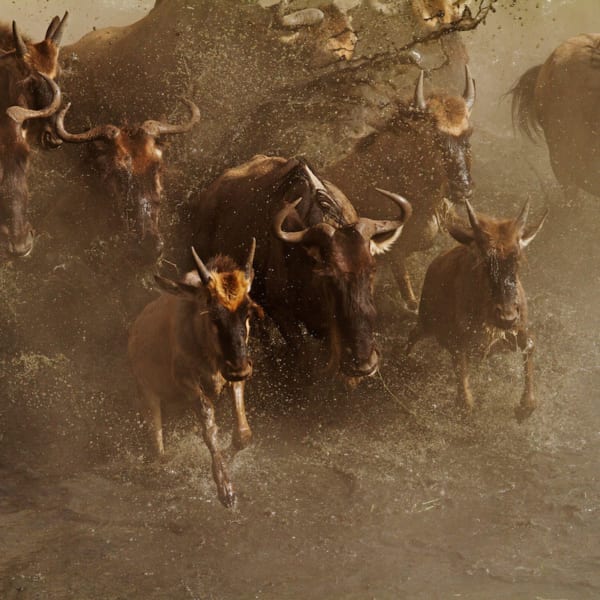 Witnessing Africa's wildebeest migration on the move is an astonishing experience. © Angama Mara
 -
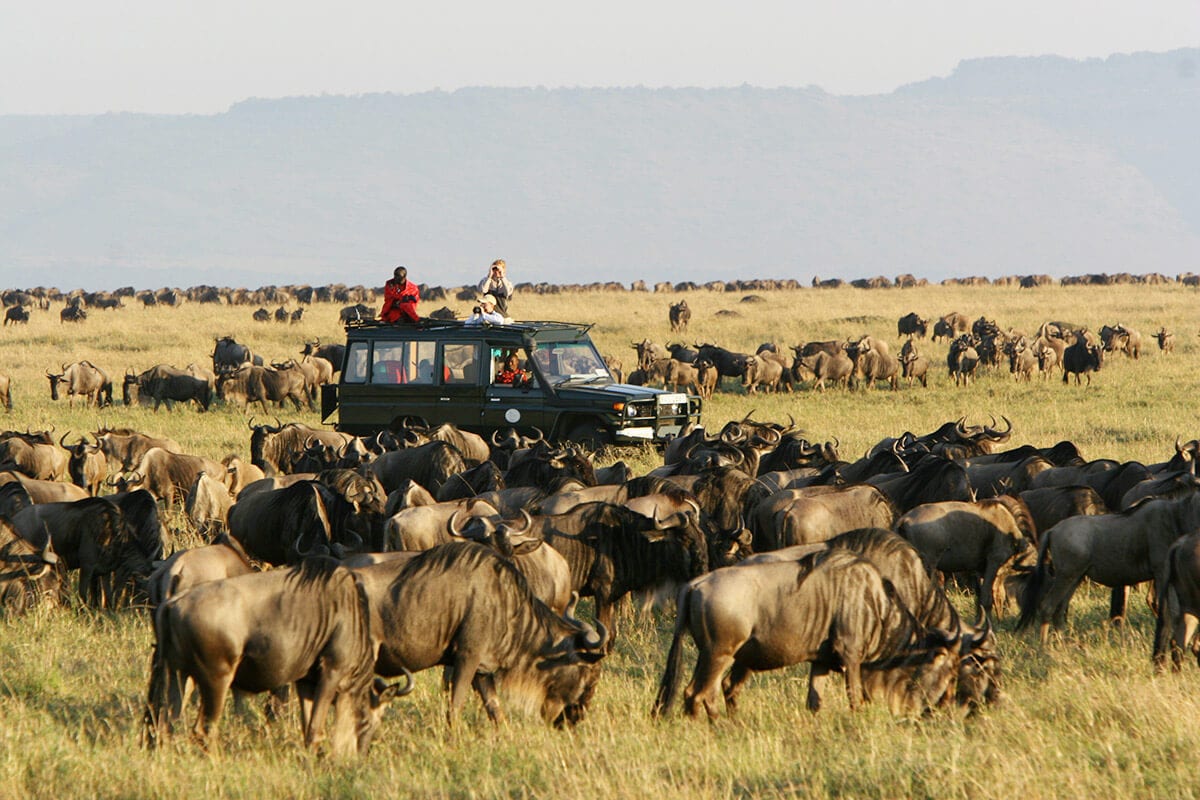
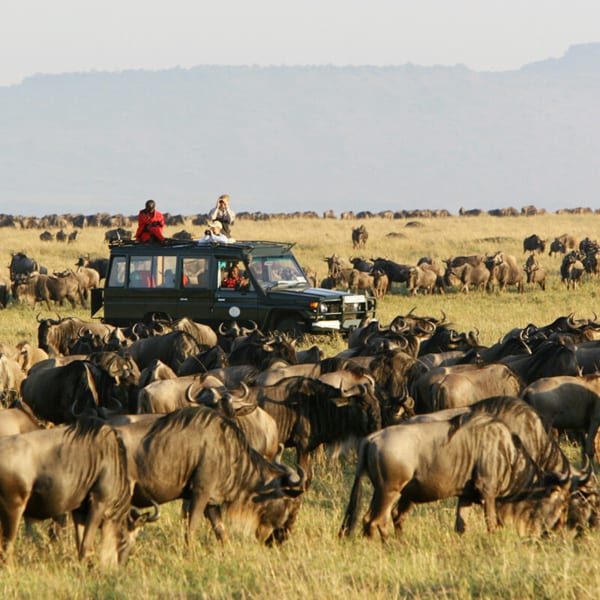 In the Masai Mara, game drives are the most popular way to see Africa's wildebeest migration. © Rekero Camp
 -
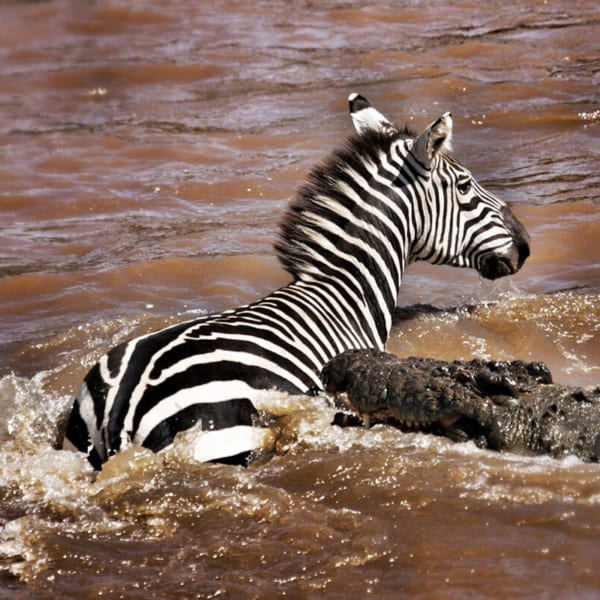 In the savannah, death is a beginning and an end in equal parts. © Serian
 -
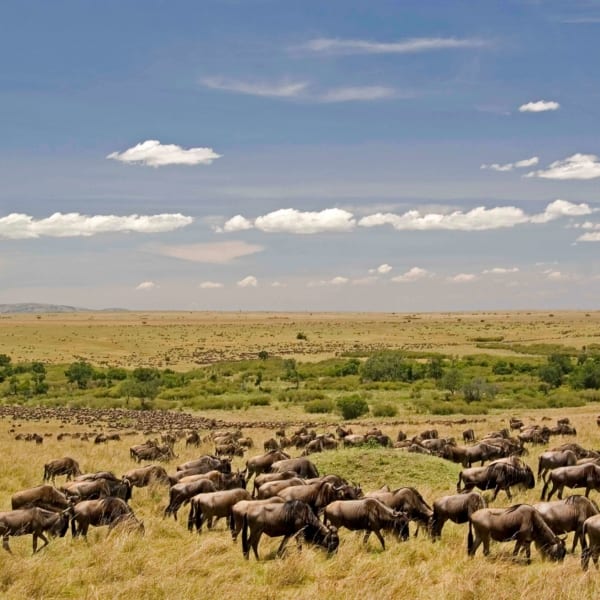 It’s literally a case of the grass being greener on the other side for Africa's wildebeest migration. © Mara Intrepids Tented Camp
Both the Mara and the adjacent conservancies offer superb accommodation options, from lodges offering proximity to riverbanks, or far-reaching views from the Oloololo Escarpment.
The conservancies are an innovative approach to conservation: protected areas managed in collaboration with the local Maasai communities, whose land it remains.
Short hops in light aircraft connect the Masai Mara to Tanzania’s northern Serengeti, still full of resident wildebeest. The Ngorongoro Crater is also within easy reach, while the climate on the Indian Ocean beaches of the Kenyan coast is perfect at this time of year. Beach time is the ideal way to relax after the drama of the migration.


